
International coastal resort megacity to be built in Quy Nhon
(NLDO) - A tourism megacity project spanning nearly 2,900 hectares in Quy Nhon (Gia Lai) has received planning approval.
The Gia Lai Provincial People's Committee has recently issued a decision approving the 1/2,000 scale zonal planning task for the Ghenh Rang - Vung Chua International Coastal Resort Urban Area.
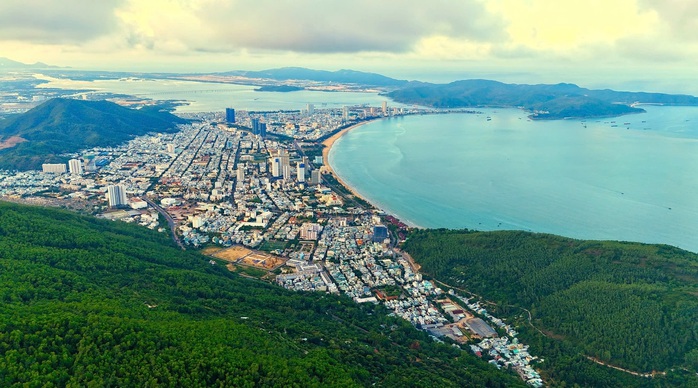
Planning location of the Ghenh Rang - Vung Chua International Coastal Resort Urban Area
The planned area is located within the wards of Quy Nhon Nam, Quy Nhon Bac, and Quy Nhon Tay (formerly under Quy Nhon city, Binh Dinh province), bordering the East Sea, with a total area of approximately 2,878 hectares.
According to the preliminary planning, the project has a population scale of approximately 40,000 people; an average tourist volume of over 6,900 arrivals per day, which can increase to more than 17,200 arrivals per day during peak periods; and the projected urban construction land area is about 1,543 hectares.
The planned area is divided into 2 main sub-zones, including the Vung Chua mountain area and the Xuan Van - Quy Hoa area. Of which, the Vung Chua mountain area is oriented towards developing mountainside housing, service facilities, resorts, sports centers, and a golf course.
The Quy Hoa - Xuan Van area will develop accommodation, entertainment, and coastal tourism service complexes, while combining the conservation of existing heritage and religious structures.
This is a key project of strategic importance to local urban and tourism development. Notably, the province is studying a plan to relocate the Quy Hoa National Leprosy Dermatology Hospital to serve the project. The Provincial People's Committee requires that the relocation must be carefully calculated to ensure that medical examination and treatment activities are not interrupted, and will only be executed when the new facility fully meets all conditions in accordance with regulations.
Gia Lai provincial leaders have assigned relevant departments and agencies to review investment procedures and site clearance, while accelerating progress but ensuring requirements on national defense and security, conservation of landscapes and historical-cultural relics, and minimizing impacts on the regional ecosystem.