
Vietnam Economic Forum 2026: How businesses navigate global geopolitical shocks
(NLDO) - The forum helped shed light on the impacts of geopolitical developments on Vietnam’s economy, while proposing solutions to help businesses.
- Amid rapidly evolving and increasingly complex global economic conditions—driven by heightened geopolitical tensions, particularly the escalating conflict in the Middle East—energy and financial markets have become highly volatile, supply chains have been disrupted, and protectionist tendencies are on the rise. Against this backdrop, Vietnam’s business community is facing a new wave of challenges in sustaining production, expanding markets, and enhancing competitiveness.
To provide a platform for dialogue, analysis, and the exchange of experience among policymakers, economic experts, and the business community on effective responses to these global economic shifts, Nguoi Lao Dong Newspaper organized the Vietnam Economic Forum 2026 – First Edition, under the theme: “Businesses in the Face of Global Geopolitical Shocks: How to Respond?”
The forum brought together representatives from central ministries and agencies, local authorities, economic experts, trade counselors, leaders of business associations, and the broader business community.
The forum’s presentations, exchanges, and discussions helped shed light on the impacts of geopolitical developments on Vietnam’s economy, while proposing solutions to help businesses adapt, build resilience, and seize new opportunities amid global volatility.
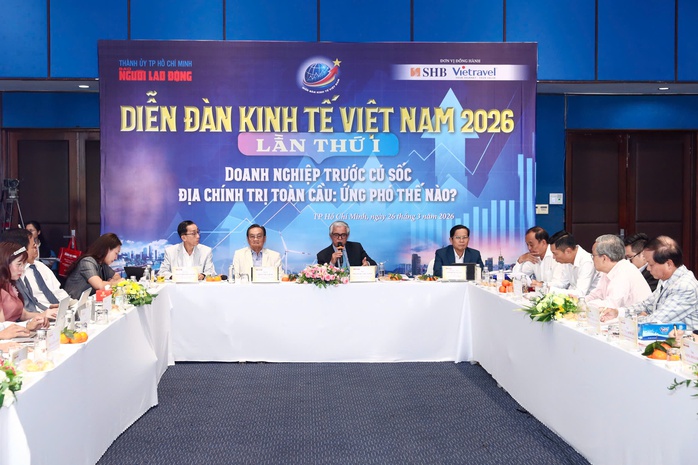
Overview of the Inaugural Vietnam Economic Forum 2026
Vietnam shows strong economic resilience
Vietnam has demonstrated strong resilience and the capacity to withstand external shocks; this is not a subjective assessment. It has been borne out by experience during two major periods—the 2008–2009 global financial crisis and the COVID-19 period (2021–2022)—when the economy maintained a relatively stable footing. Although the current context differs in many respects, several core lessons can still be drawn.
First, the challenges facing the global economy did not emerge solely with the outbreak of conflict in the Middle East. As early as the beginning of the year, the period from 2023 to 2026 had already been forecast as one of slowing growth, accompanied by rising geopolitical risks.
Domestically, the economy is likewise confronting multiple headwinds. Weakening market demand has led to shorter-term, smaller-scale orders, leaving businesses under strain from the outset of the year. Pressures from exchange rates, financial costs, and rising prices of imported inputs had already been present. Energy volatility has further driven up logistics costs, an area where Vietnam already ranks among the higher-cost countries in the region.
In addition, the real estate market—a sector with significant implications for growth and macroeconomic stability—remains in a period of adjustment.
In response to these factors, alongside developments in the Middle East, the government has proactively developed response scenarios on one-month and three-month horizons to safeguard growth targets.
From a business perspective, experience from previous crises suggests that this is a time to tighten cash flow management, control inventories, and maintain production capacity. It is essential to retain customers, preserve supply chains, and not turn away orders, even small ones. Firms that sustain their operational base and workforce will be better positioned for a rapid recovery when market conditions improve.
At the same time, companies should proactively reduce costs and fully leverage available support policies. On the government side, further measures are needed to ease tax and fee burdens, particularly for small and medium-sized enterprises. More importantly, macroeconomic stability must be firmly maintained—especially in terms of exchange rates, interest rates, and liquidity.
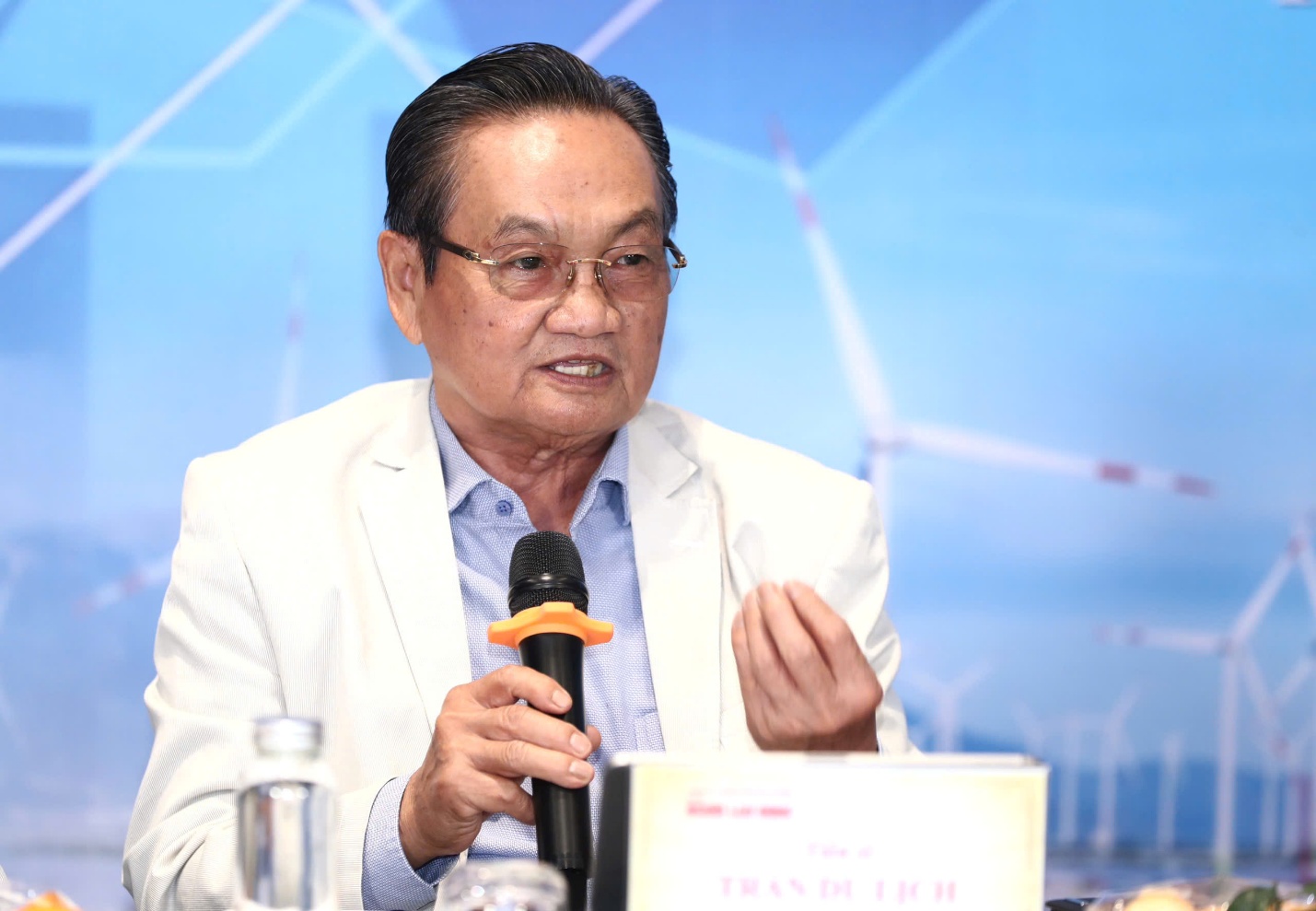
Dr. Tran Du Lich, Former Director of the Ho Chi Minh City Institute of Economics
Assoc. Prof. Dr. Tran Hoang Ngan, National Assembly Deputy and Chairman of the Advisory Council of Saigon University:
Short-term solutions
First, fuel prices must be kept under control. In practical terms, this requires flexible use of fiscal instruments—such as tax and fee exemptions or reductions—to stabilize prices and prevent spillover effects. He noted that the state budget is currently well positioned to support such measures, with revenues exceeding projections by more than VND 80 trillion in the first two months of the year.
Second, cost support for businesses should be strengthened. This includes minimizing state-administered charges—such as taxes, customs fees, and transport infrastructure fees—to directly alleviate the burden on enterprises.
At the same time, market oversight needs to be tightened, with stronger action against smuggling, hoarding, and opportunistic price gouging, thereby protecting consumers and maintaining a fair business environment.
On fiscal policy, he supports a more accommodative stance given that public debt remains under control at around 37% of GDP. However, any easing should be accompanied by strict discipline, thrift, and anti-waste measures, with resources prioritized for public investment—particularly in three strategic infrastructure areas: transport, energy, and technology. In his view, improving transport infrastructure will help reduce logistics costs and fuel consumption for businesses.
Regarding monetary policy, he recommends balancing multiple objectives: controlling inflation, supporting growth, and safeguarding financial system stability. Priority should be given to ensuring liquidity and maintaining stable interest rates, as current inflation is largely driven by cost-push factors—such as energy prices and geopolitical tensions—rather than excess money supply. As such, interest rates should be prevented from rising excessively in order to support businesses and preserve employment.
In the longer term, he underscores three mandatory pillars of transformation: green transition, digital transformation, and economic restructuring.
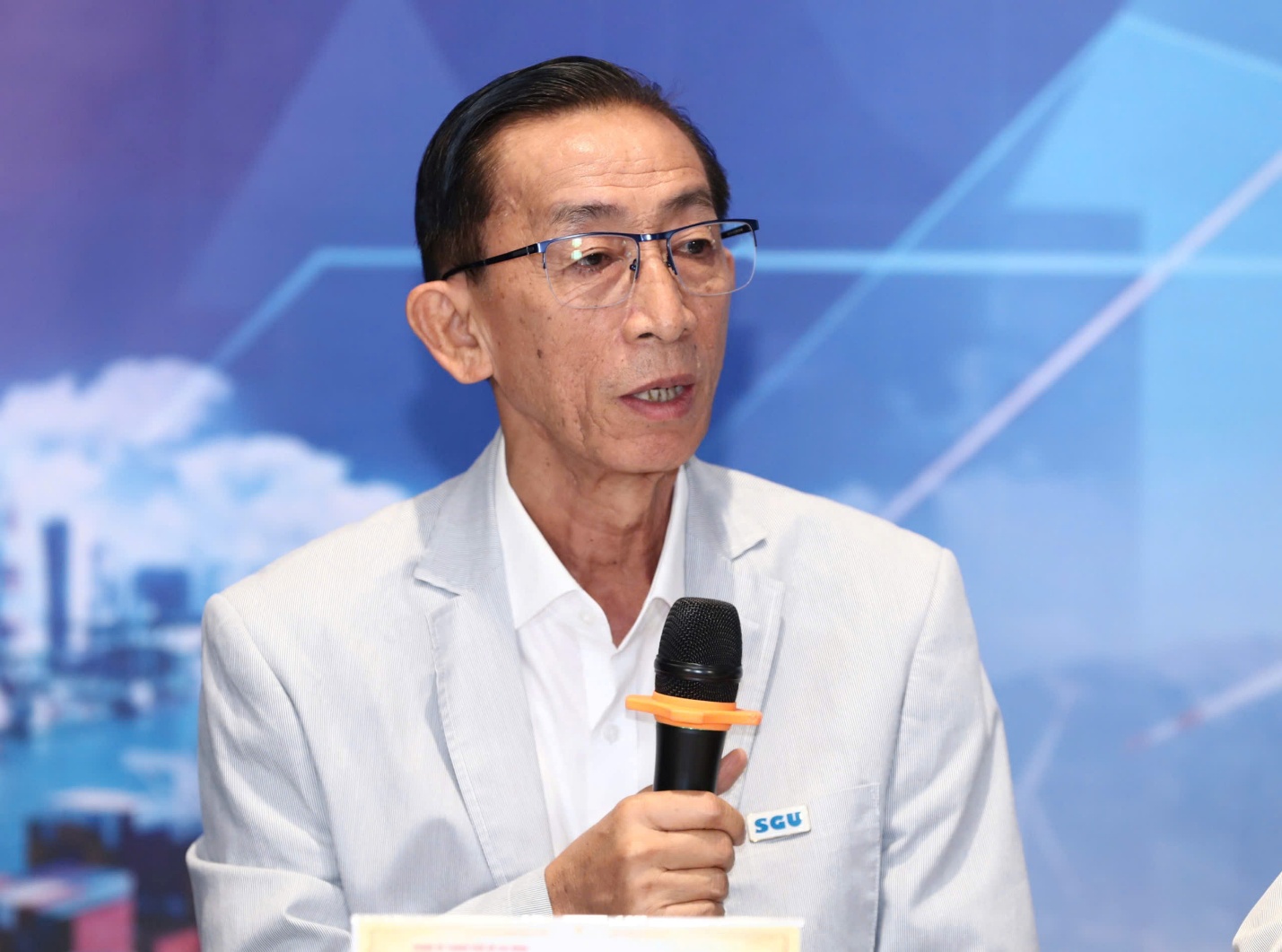
Assoc. Prof. Dr. Tran Hoang Ngan, National Assembly Deputy and Chairman of the Advisory Council of Saigon University
Mr. Pham Quang Vinh, former Deputy Minister of Foreign Affairs and former Vietnamese Ambassador to the United States:
The energy shortage could persist for some time to come
A series of geopolitical shocks has unfolded in rapid succession in recent times, with the current focal point being the conflict in the Middle East. The worst-case scenario will depend on both the intensity of the conflict and its duration.
In particular, any disruption at the Strait of Hormuz—a critical global energy shipping route—would have far-reaching repercussions for energy supply, as well as for global transport and logistics.
In the context of a “new normal” marked by instability and disruptions, both governments and businesses must adopt a more proactive approach to adaptation.
A key priority is to strengthen supply security, develop contingency scenarios, and build up strategic reserves—particularly of energy resources such as oil. The overarching principle is to maintain partnerships while effectively managing risks, thereby minimizing losses in uncertain situations.
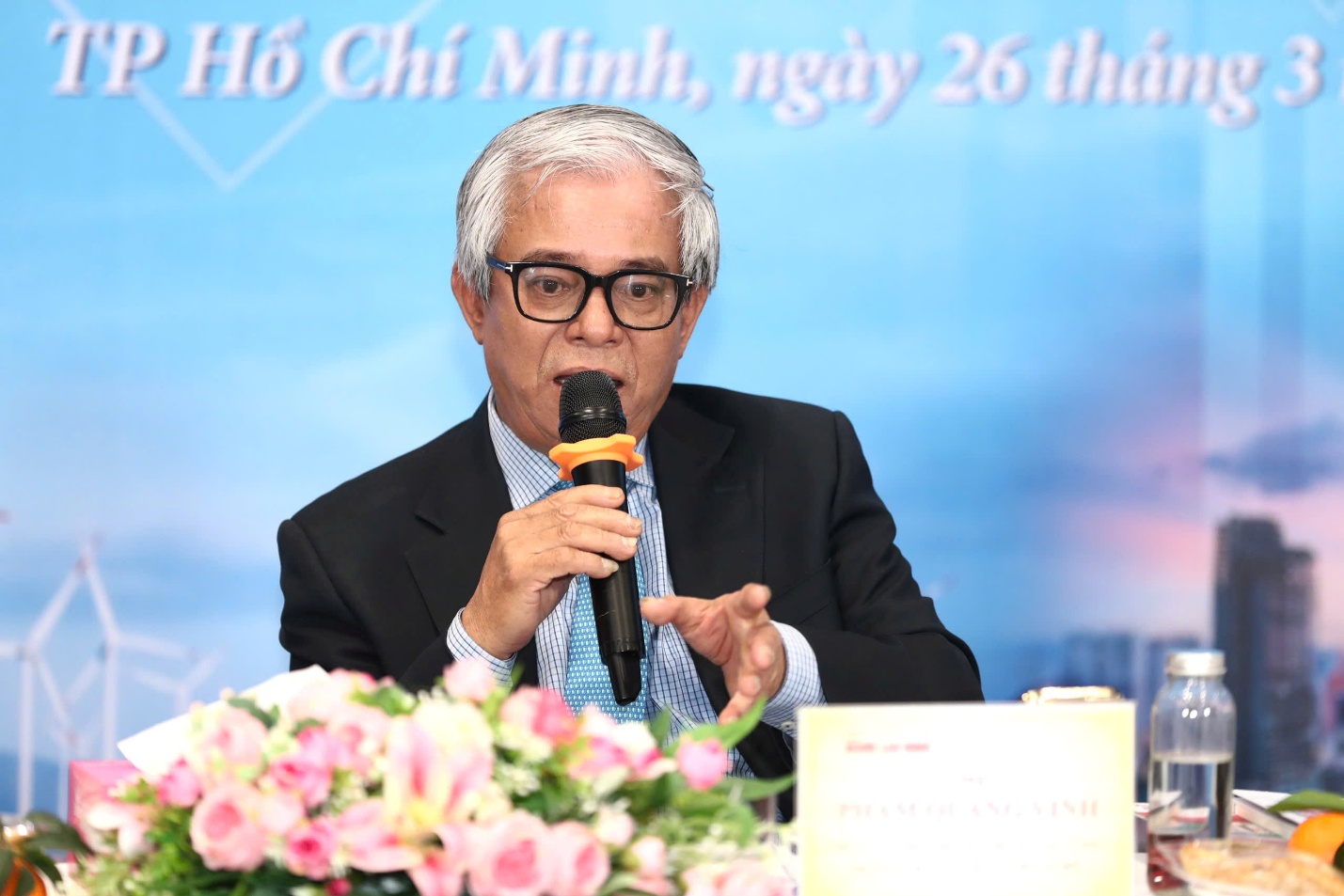
Mr. Pham Quang Vinh, Former Deputy Minister of Foreign Affairs and Former Vietnamese Ambassador to the United States
The overall impact remains manageable
Adhering closely to the guidelines and resolutions of the Party, the National Assembly, and the Government, as well as the direction of the Prime Minister, the State Bank of Vietnam (SBV) has, in recent years, conducted monetary policy in a proactive, flexible, and effective manner. At the same time, it has ensured close, coordinated, and harmonious alignment with fiscal and other macroeconomic policies, thereby helping to prioritize economic growth while maintaining macroeconomic stability and keeping inflation under control.
In the period ahead, the SBV will continue to closely monitor developments in international financial markets—particularly fluctuations in the US dollar and capital flows—in order to coordinate with relevant ministries and agencies in implementing a comprehensive set of policy measures.
Specifically, the SBV will maintain a proactive and flexible monetary policy stance, calibrated to market conditions, while strengthening coordination with fiscal policy and other macroeconomic frameworks.
Policy instruments—including interest rates, exchange rates, credit, and open market operations—will be deployed in a flexible and balanced manner, with priority given to inflation control, safeguarding macroeconomic stability, supporting growth, and ensuring the major balances of the economy.
In addition, the State Bank of Vietnam (SBV) will direct credit institutions to ensure safe and effective credit growth, channeling capital into production and business activities, priority sectors, and key growth drivers in line with the Government’s and the Prime Minister’s orientation. At the same time, credit to potentially high-risk sectors will be strictly controlled.
The banking sector will also step up efforts to review and simplify lending procedures, while accelerating the adoption of digital transformation in credit processes to facilitate easier access to financing for both individuals and businesses.
In parallel, digital transformation and the application of information technology across the banking system will continue to be intensified.
Furthermore, the SBV will proactively and promptly provide official, transparent, and publicly accessible information on policy directions and the management of financial, monetary, foreign exchange, and gold markets, thereby helping to stabilize public sentiment and strengthen market confidence.
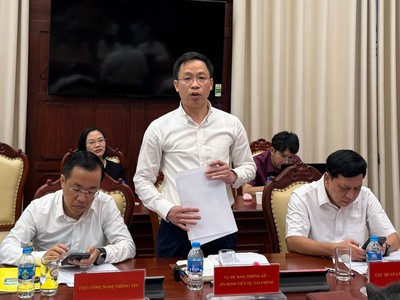
Mr. Nguyen Phi Lan, Director General of the Forecasting and Statistics Department, State Bank of Vietnam (SBV)
Ms. Nguyen Cam Trang, Deputy Director General of the Agency of Foreign Trade, Ministry of Industry and Trade:
Important considerations for businesses
From a regulatory perspective, it is clear that market diversification and supply chain upgrading constitute two key pillars for strengthening resilience against such shocks.
In recent years, with regard to market diversification, the Ministry of Industry and Trade has implemented a wide range of measures—from leveraging existing free trade agreements (FTAs) to continuing negotiations and concluding new agreements with potential markets—thereby expanding the “playing field” for businesses participating in international markets.
At the same time, trade promotion activities have been intensified, supported by Vietnam’s network of trade offices abroad, which help bring domestic enterprises to international markets to engage directly with partners.
Conversely, trade counselors have also facilitated visits by foreign businesses to Vietnam, creating opportunities for direct business matching and transactions. These efforts are widely regarded as practical and effective forms of trade promotion.
Beyond these initiatives, another critical component of market diversification is market intelligence. The Ministry has launched a digital platform on overseas markets, providing detailed and specific information to help businesses access insights more easily. In international trade, a clear understanding of regulations, demand, and consumer preferences in foreign markets is essential for business success.
However, it should be emphasized that market diversification should not be limited to export markets alone, but must also place particular emphasis on diversifying import sources.
Proactively developing alternative market strategies will help businesses mitigate the risk of supply disruptions, while also contributing to a more balanced trade structure. At present, Vietnam runs significant trade deficits with certain markets, while recording substantial surpluses with others; such imbalances, over the long term, may pose underlying risks.
Beyond diversification, in enhancing competitiveness, regulators have identified the need to prioritize selective trade and industrial policies, focusing on key sectors so as to both sustain export growth and strengthen Vietnam’s efficiency and position within global supply chains.
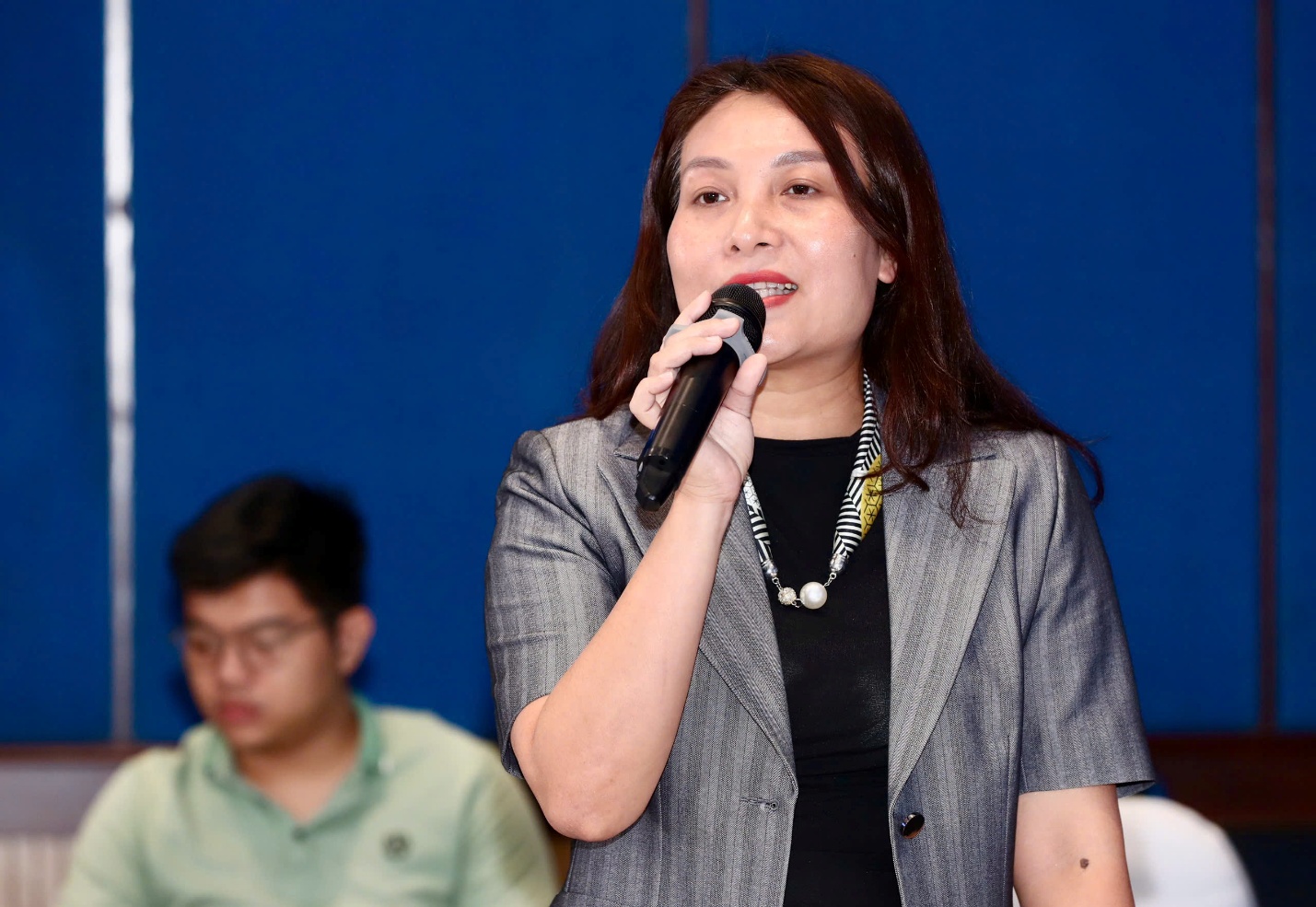
Ms. Nguyen Cam Trang, Deputy Director General of the Agency of Foreign Trade, Ministry of Industry and Trade
Journalist - Dr. To Dinh Tuan, Editor-in-Chief of Nguoi Lao Dong Newspaper
Ten strategic policy pillars
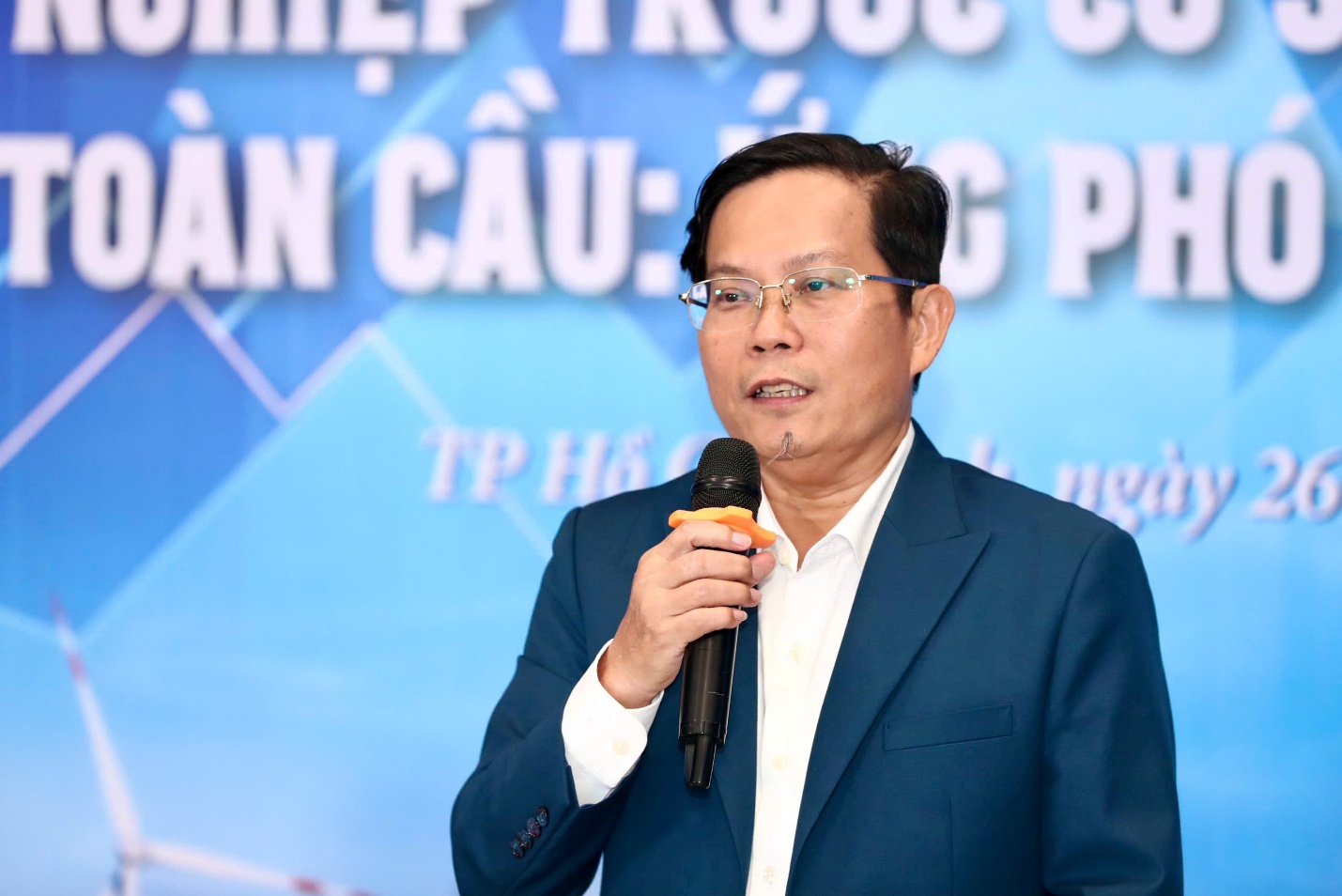
Journalist - Dr. To Dinh Tuan, Editor-in-Chief of Nguoi Lao Dong Newspaper
Drawing on insights from the forum, the organizing committee has distilled ten strategic solution areas for businesses:
First, prioritize cash flow management. In the current environment, “cash is king”; firms must ensure that cash flows remain smooth and efficient at all times.
Second, diversify supply sources. Avoid over-reliance on any single country or supplier in order to minimize the risk of supply disruptions.
Third, enhance logistics flexibility. Proactively engage multiple shipping lines and transport routes. When key corridors such as the Strait of Hormuz or the Red Sea are disrupted, alternative options must be readily available.
Fourth, recalibrate contract terms. Introduce flexible clauses on price, exchange rate, and freight cost fluctuations to better safeguard against market volatility.
Fifth, control energy use and operating costs. Energy is the lifeblood of business; reducing electricity and fuel consumption, while optimizing warehousing, directly strengthens competitiveness.
Sixth, expand output markets. Prioritize tapping into Asia’s vast consumer base—particularly ASEAN—and fully leverage the free trade agreements (FTAs) that Vietnam has signed.
Seventh, adopt risk-based inventory management. Increase reserves of critical, hard-to-substitute inputs, while minimizing inventories of slow-moving goods.
Eighth, build early warning systems. Establish dedicated teams to closely monitor oil prices, freight rates, and exchange rate movements in order to respond swiftly.
Ninth, strengthen supply chain localization. This is the time for domestic enterprises to collaborate more closely. In the event of external disruptions, internal supply linkages can help sustain production. The role of the Ho Chi Minh City Business Association (HUBA) and industry associations is particularly important in this regard.
Tenth, do not wait to react. Each enterprise should develop pre-defined scenarios—worst-case, base-case, and best-case—with concrete action plans for each, ensuring constant preparedness and strategic agility.