
Proposal to establish the Ho Chi Minh City Free Trade Zone
(NLDO)-The Government has proposed setting up a free trade zone in Ho Chi Minh City to draw high-quality investment, expand modern services and spur innovation
At its recent session, the Standing Committee of the National Assembly reviewed the draft Resolution amending and supplementing a number of articles of Resolution No. 98/2023/QH15 of the National Assembly on piloting several specific mechanisms and policies for the development of Ho Chi Minh City.
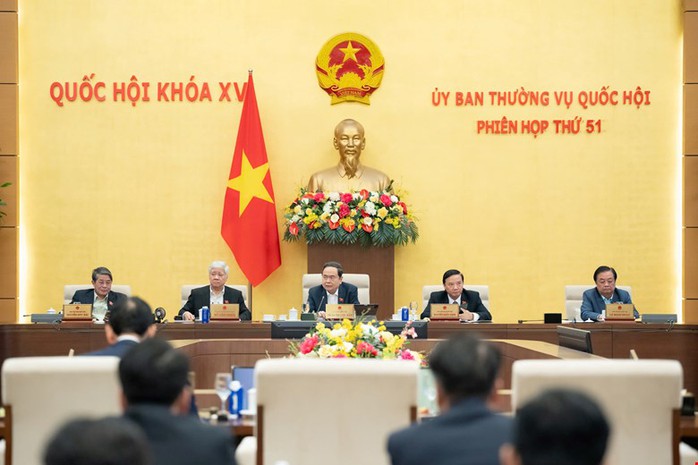
The National Assembly Standing Committee holds its 51st session. Photo: Pham Thang
Ho Chi Minh City needs additional breakthrough and exceptional measures under Resolution 98
According to the Government’s report presented by Minister of Finance Nguyễn Văn Thắng, after two years of implementing Resolution No. 98, Ho Chi Minh City's economy (prior to the merger) has recovered rapidly from the severe downturn caused by the COVID-19 pandemic and gradually stabilized on the basis of renewing its growth model, restructuring its economy, and promoting science-technology applications and innovation.
Following its merger with Ba Ria–Vung Tau and Binh Duong, Ho Chi Minh City has expanded its development capacity, now covering an area of 6,772.6 km² with a population of 13.6 million.
To realize its targets for the next five years, the city is expected to require an additional US$8–12 billion in mobilized resources each year.
However, the state budget can meet only about 30% of that demand, falling short of providing the driving force needed for socio-economic development.
To achieve these goals and ensure the city’s role as a leading growth engine capable of delivering double-digit economic expansion as early as 2026, Ho Chi Minh City needs additional breakthrough and exceptional measures under Resolution 98 to seize investment opportunities and address bottlenecks, thereby unlocking development resources.
The city will focus on large-scale, strategic, high-impact projects, especially those related to key traffic and urban infrastructure, tourism infrastructure, environmental treatment, water resource management, climate change adaptation, high technology, healthcare, and education; and on establishing a free trade zone.
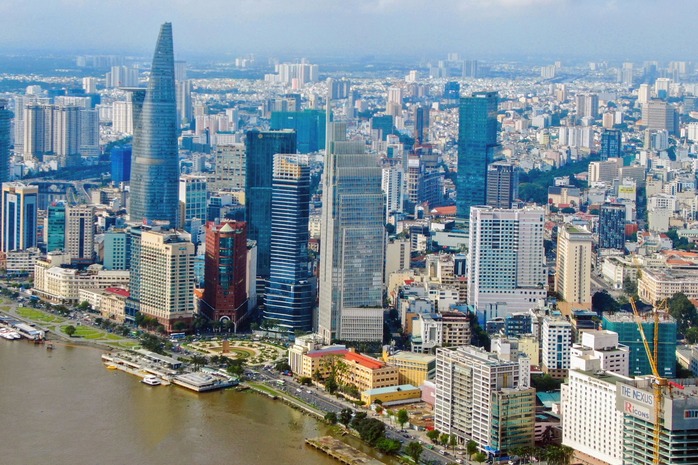
The amendment and supplementation of certain articles of Resolution 98 aim to maximize the potential, strengths, and advantages stemming from the expanded scale and administrative boundaries of Ho Chi Minh City, contributing to the realization of the double-digit economic growth target during the 2026–2030 period.
A regional hub for economy, finance, and commerce
In the draft, the Government proposes the establishment of the Ho Chi Minh City Free Trade Zone. The draft sets out a complete legal framework for the model, including its location, functional subdivisions, management mechanisms, authority, land policies, investment incentives, administrative simplification measures, and special customs mechanisms.
According to the Government, this proposal aims to create a distinct and superior institutional space for the Ho Chi Minh City Free Trade Zone, similar to those in Hai Phong and Da Nang, in order to attract high-quality investment, develop modern services, and promote innovation—thereby advancing the city toward becoming a regional hub for economy, finance, and commerce.
Regarding specific policies for the Free Trade Zone, the Government proposes authorizing the Ho Chi Minh City People’s Committee to decide on the establishment, expansion, and adjustment of the zone’s boundaries. Such decisions would be considered adjustments to the city’s master plan. Meanwhile, the municipal People’s Council would set out the procedures for establishing, expanding, and adjusting the zone.
The draft also proposes allowing land allocation and leasing without auctions or bidding for investment projects within the Free Trade Zone (except commercial housing projects), in order to accelerate investment attraction and infrastructure development.
Administrative procedures and investment conditions would be reformed so that foreign investors may establish economic organizations without having an investment project or prior investment registration certificate, provided they comply with market access conditions.
The draft also proposes exempting goods from specialized inspections, removing internal trade management measures, and applying priority customs regimes for eligible enterprises.
The Government further proposes a corporate income tax rate of 10% for 20 years, including four years of exemption and a 50% reduction for nine additional years; and a 50% reduction in personal income tax for 10 years for experts, scientists, and high-quality workers—an incentive level exceeding that of current economic zones.
According to the appraisal report of the Economic and Budgetary Committee, the Standing Committee agrees on the need to amend and supplement a number of articles in Resolution No. 98.
The appraisal body emphasized that these amendments are necessary to align with the restructuring of the local government apparatus and the operation of a two-tier administrative system.
Additionally, they seek to leverage the potential, strengths, and advantages arising from Ho Chi Minh City’s expanded scale and administrative boundaries, contributing to the goal of achieving double-digit economic growth during 2026–2030.
The amendment and supplementation of Resolution 98 also aim to institutionalize the guidelines, policies, and laws of the Party and the State, especially new and breakthrough guidelines and policies for Ho Chi Minh City's development.