






Amid the towering limestone mountains and vast stretches of primeval forest on Cat Ba Island lies a small village tucked quietly in a valley - a place where time seems to move more slowly, and the sounds of roosters crowing, flowing streams, and the scent of straw remain unchanged.
That place is the ancient village of Viet Hai, located in Viet Hai Commune, Cat Hai District (former administrative unit), now part of the Cat Ba Special Zone of Hai Phong City - a "hidden gem" nestled in nature, where unique historical, cultural, and ecological values converge.
Peaceful Paradise
Viet Hai is surrounded by dense forest and the characteristic limestone mountains of the Cat Ba National Park, part of a biosphere reserve recognized by UNESCO. Its isolated geography meant that for decades the village remained almost completely cut off from the hustle and bustle of the outside world.
In the past, reaching the village was possible only by trekking dozens of kilometers through the forest or by taking a boat across Lan Ha Bay and then continuing on foot.

Viet Hai fishing village seen from above
It is precisely this isolation that has contributed to preserving the appearance of an ancient Northern Vietnamese village for Viet Hai. Tiled or thatched roofs, stone walls, simple village gates, paddy drying yards, water wells, and fish ponds... all together create a peaceful rural picture amidst the vast wilderness.
According to local residents, Viet Hai Village was formed over a century ago when fishermen on Lan Ha Bay, caught in a massive storm, sought refuge in the fishing village and unexpectedly discovered a freshwater source, fertile land, and the protection of the mountains and forests from storms.
From just a few initial households, Viet Hai gradually developed into a small but tightly knit community living in close harmony with the rugged natural environment.
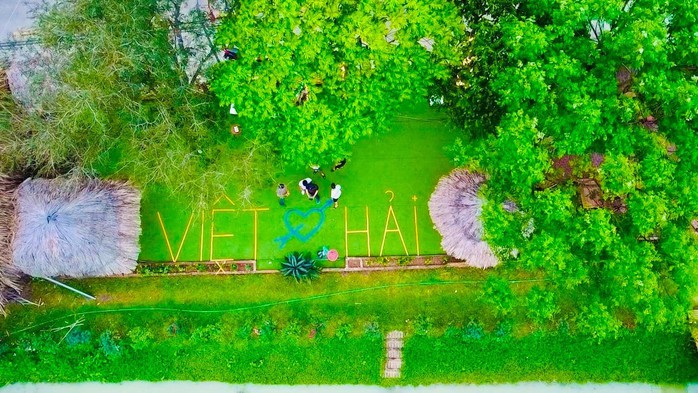
An aerial view of the lush greenery of Viet Hai ancient village
Walking through Viet Hai village today, visitors can easily encounter houses with thick stone walls and low roofs - an architectural style suited to the stormy conditions of the coastal region. The stones were taken from the mountains and stacked manually with little mortar, creating walls that have endured through the years. Some houses, over a hundred years old, still retain their original structure.
The lives of the local people are rooted in self-sufficient agriculture. Rice paddies lie nestled between the foothills, small but fertile thanks to silt and water sources from mountain streams. In addition to rice cultivation, residents raise chickens and pigs, farm fish, and grow green vegetables.
In recent years, as ecotourism has flourished, many households have opened homestays to serve foreign tourists who favor authentic local experiences.
Community-based tourism with a unique identity
To reach Viet Hai, many travelers choose a forest-trekking journey starting from the center of Cat Ba National Park. The trail, about 10–12 kilometers long, winds under ancient tree canopies with tangled roots, where birdsong echoes through the deep green space.
After climbing rocky slopes and crossing small streams, the moment when the Viet Hai valley suddenly appears ahead often leaves visitors overwhelmed with excitement.
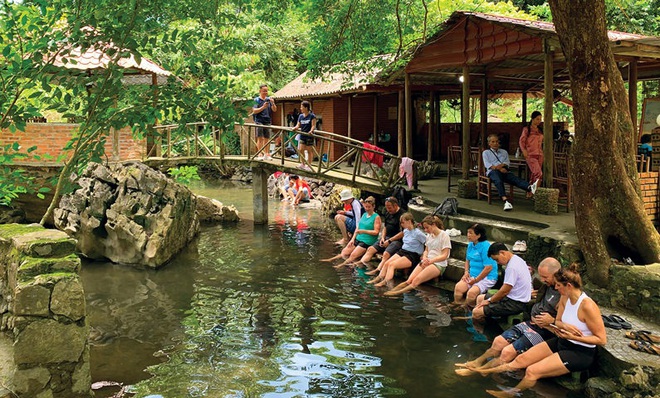


Visitors savor authentic moments in Viet Hai fishing village
For those who do not have enough time or physical endurance for a forest trek, another option is to take a boat across Lan Ha Bay and then continue into the village by electric cart or bicycle. Whichever route they choose, the journey offers a sense of discover - like venturing into a hidden land amid pristine nature.
When the Ha Long Bay - Cat Ba Archipelago complex was inscribed by UNESCO as a World Natural Heritage site (extended), Cat Ba's tourism entered a period of robust development. From an isolated rural village, Viet Hai has gradually become a destination featured by many international travel agencies.
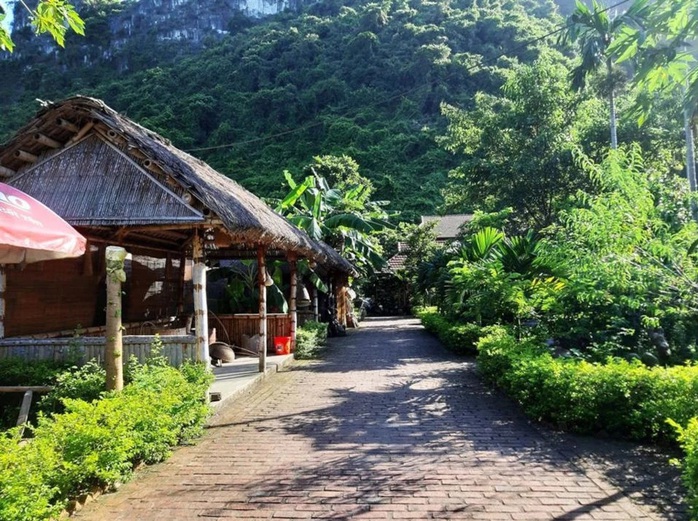
The fishing village has a history spanning over 100 years
Community-based tourism in Viet Hai is not developing mass-market style but follows a "slow but steady" approach. Local residents have been trained in tourism skills, including welcoming guests, preparing local cuisine, maintaining environmental hygiene, and preserving traditional ways of life.
Homestay models have been encouraged, making use of villagers own homes. This approach not only provides additional income for local families but also allows visitors to experience authentic local life.
Within the broader picture of tourism in Cat Ba, the ancient fishing village of Viet Hai is regarded as a distinctive highlight, complementing the island's beach tourism and high-end resort offerings.
Community-based tourism in Viet Hai not only brings economic benefits to local residents but also helps preserve cultural traditions, protect the landscape, and conserve the biodiversity of Cat Ba National Park.
In August 2025, the People's Committee of Cat Hai Special Zone announced the decision to recognize Viet Hai ancient fishing village as a community-based tourism destination. This area consists of two hamlets with a total area of 6,485 hectares, comprising 87 households and 295 residents.



 và quét mã QR
Bạn không thể gửi bình luận liên tục. Xin hãy đợi
60 giây nữa.