






Data released by the National Statistics Office under the Ministry of Finance show that in March 2026, Vietnam welcomed nearly 2.1 million international visitors. In the first quarter of 2026, total international arrivals reached 6.76 million, up 12.4% year-on-year and marking the highest first-quarter figure on record.
China has emerged as Vietnam's largest source market with over 1.4 million arrivals, followed by South Korea in second place with more than 1.3 million visitors. Together, these two markets account for 40% of total international arrivals to Vietnam.
According to the National Statistics Office, increasingly liberal visa policies, more professional promotion and marketing activities, a diverse range of tourism products aligned with market trends, and continuously improving service quality have formed a solid foundation for attracting international visitors to Vietnam.
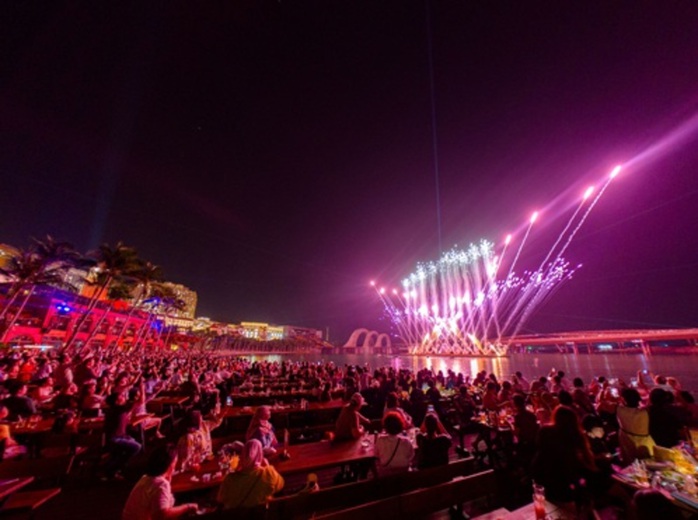
Phu Quoc is emerging as an attractive destination for international visitors. Photo: Lam Giang
However, amid ongoing global geopolitical uncertainties, the question remains whether Vietnam’s tourism sector has sufficient appeal to achieve its target of welcoming 25 million international visitors.
In an interview with Nguoi Lao Dong newspaper, Nguyen Ngoc Toan, CEO of Image Travel & Event, said Vietnam is still considered a relatively new destination on the global tourism map, particularly for well-traveled visitors. The development of tourism infrastructure, entertainment facilities, and unique architectural projects across the country has further enhanced its attractiveness.
According to Toan, while Vietnam’s strengths previously lay mainly in its natural landscapes and cultural heritage, these have now been complemented by an expanding range of services and new tourism products. This growing diversity allows the country to cater to a wide range of visitor segments. At the same time, social media has played a crucial role in rapidly promoting emerging destinations in Vietnam to a global audience.
According to Nguyen Quoc Ky, Chairman of Vietravel Group, in order to sustain growth momentum, Vietnam needs to effectively seize opportunities through a robust policy framework and close coordination between regulators and businesses.
“In the context where enterprises continue to face multiple challenges, the government must take the lead and clearly demonstrate its enabling role. There is an urgent need to develop a comprehensive strategy to capture shifting flows of international tourists. Policies should be ‘tailor-made’ for each market, with clearly defined roadmaps. The Vietnam National Authority of Tourism and the Civil Aviation Authority of Vietnam could convene major enterprises to jointly formulate detailed strategies for each target market” - Ky suggested.
Meanwhile, many experts argue that Vietnam’s tourism sector needs to shift from a growth model driven by volume to a more balanced approach that emphasizes quality and value addition. Otherwise, the industry may achieve large scale but lack sustainability and resilience to external shocks.
One key direction is to diversify source markets in terms of geography, travel motivations, and consumer behavior, thereby building a more stable demand base.
Supporting businesses amid rising costs
Tran Nguyen, Deputy CEO of Sun Group's Entertainment & Hospitality Division, said that if oil prices remain elevated and supply continues to be unstable, the negative impact could persist, directly affecting the growth targets of Vietnam’s tourism and hospitality ecosystem in 2026 and the years ahead.
In this context, businesses have proposed that the government consider reducing value-added tax (VAT) on accommodation, entertainment, and tour services over the next six months, or adopt more flexible adjustments in line with market developments and the geopolitical situation.



 và quét mã QR
Bạn không thể gửi bình luận liên tục. Xin hãy đợi
60 giây nữa.