






The resolution underscores that culture and the people constitute the foundation and an essential endogenous resource - a dynamic driving force, a central pillar, and a guiding framework for the nation’s rapid and sustainable development.
It further emphasizes that cultural values must be deeply and harmoniously woven into every sphere of social life - from politics, the economy, and society to the environment, national defence and security, and foreign affairs - thereby becoming a genuine source of national soft power in the new era.
Looking ahead to 2030
By 2030, the Politburo seeks to accelerate the cultivation of an advanced Vietnamese culture deeply rooted in national identity, while fostering a vibrant and healthy cultural environment - spanning families, schools, society at large, and the digital sphere.
In parallel with nurturing cultural industries and building a start-up ecosystem for creative arts, the Politburo has urged the creation of internationally competitive cultural industry groups founded on high technology and innovative business models.
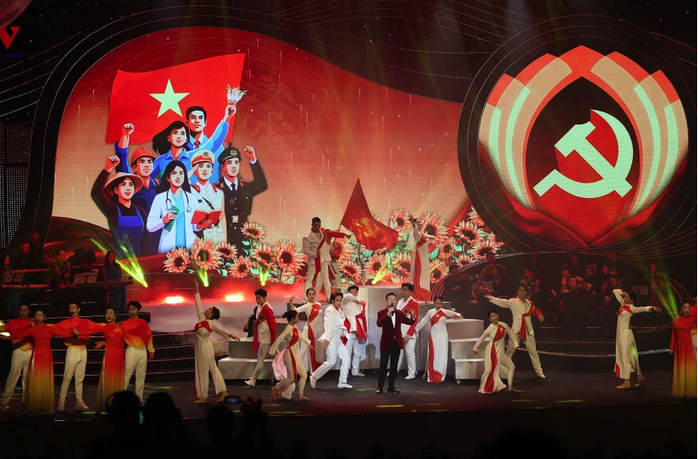
Cultural values are to be closely and harmoniously integrated into all aspects of social life
Specific targets include the completion of a comprehensive national cultural infrastructure system, ensuring that 100 per cent of two-tier local administrations and the armed forces are equipped with cultural facilities that meet the needs of grassroots communities, officials, and soldiers. The resolution also calls for 90 per cent of grassroots cultural institutions to operate regularly and effectively.
By 2026, the Politburo aims to achieve full digitisation of all nationally ranked and special national cultural heritage sites, while guaranteeing that pupils, learners, and students across the national education system have regular and meaningful access to artistic activities and heritage education.
To realize these ambitions, the resolution mandates resources commensurate with cultural development, stipulating that at least 2 per cent of total annual state budget expenditure be allocated to culture, with gradual increases in line with practical needs.
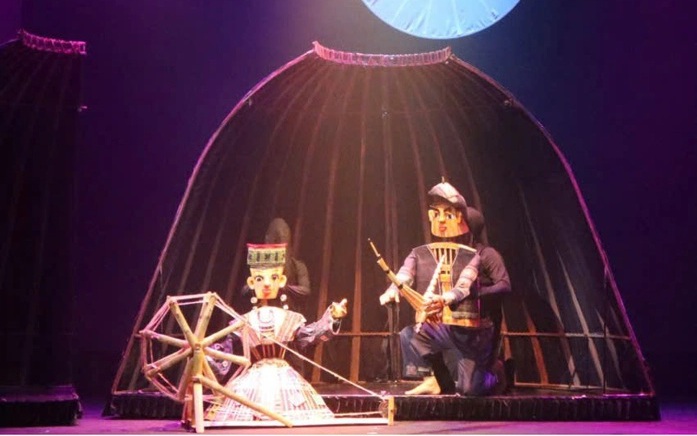
In addition, cultural industries are expected to contribute 7 per cent of GDP, with five to ten national brands in cultural industries to be formed in areas with strong potential such as cinema, performing arts, cultural tourism, design and fashion.
Looking ahead to 2045
Looking ahead to 2045, the Politburo has set the goal of affirming Việt Nam’s cultural stature as a high-income, socialist-oriented developed nation. By that time, Việt Nam is envisioned as an attractive hub for major regional and international cultural and artistic events, and as one of the dynamic centres of global cultural and creative industries.
The country aspires to host at least 10 internationally recognised art festivals and cultural events, while securing UNESCO recognition and inscription for an additional eight to ten cultural heritage sites.
Another strategic target is for Việt Nam to rank among the top three in ASEAN and within the top 30 worldwide on the Soft Power Index, as well as in the export value of cultural industry products.
According to the Politburo, investment in culture is an investment in the nation’s sustainable development and its future. In this spirit, November 24 has been designated as Việt Nam Culture Day - a fully paid public holiday designed to give people greater opportunities to engage in cultural activities, inspire artists and cultural practitioners to create, and foster cultural and civilised lifestyles across society.



 và quét mã QR
Bạn không thể gửi bình luận liên tục. Xin hãy đợi
60 giây nữa.